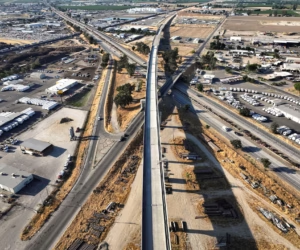
Hong Kong — The Central Kowloon Bypass (Yau Ma Tei Section), a major transport infrastructure project strengthening east–west connectivity across Kowloon, officially opened to traffic on 21 December 2025. The new corridor is expected to significantly ease congestion in central Kowloon and improve overall network efficiency.
Arup, in joint venture with Mott MacDonald, provided comprehensive multidisciplinary services for the project from initial planning through to completion. The bypass plays a critical role in Hong Kong’s strategic road network by allowing through-traffic to bypass heavily congested urban areas.
The project comprises a 4.7-kilometre dual three-lane bypass, linking the Yau Ma Tei Interchange in West Kowloon with the Kai Tak Development Area and Kowloon Bay in East Kowloon. A key feature is the 3.9-kilometre tunnel, constructed beneath some of the most densely built-up districts in the city, with complex interchanges at both ends.
With the opening of the bypass, peak-hour travel time between Yau Ma Tei and Kowloon Bay has been reduced from around 30 minutes to approximately 5 minutes, delivering substantial benefits in journey reliability and traffic flow.
Despite highly constrained site conditions—including tunnelling beneath existing buildings while maintaining live traffic—the Arup and Mott MacDonald team successfully addressed complex engineering challenges using advanced digital tools and innovative construction techniques. Expertise spanned transportation planning, highways, tunnelling, bridge structures, environmental protection, mechanical, electrical and plumbing (MEP), and tunnel ventilation design.
Environmental enhancement and placemaking form a defining aspect of the project. Extensive landscaping and urban greenery have been integrated along the bypass, creating new public spaces for the community. The Yau Ma Tei Landscaped Deck, covering approximately 32,000 square metres, provides a green pedestrian link between Yau Ma Tei and West Kowloon Station, promoting walkability and active travel.
Sustainability was embedded throughout design and delivery. The Kai Tak Administration Building associated with the project has achieved a Platinum Rating under BEAM Plus New Buildings Version 2.0, reflecting high environmental performance standards.
The bypass also passes through areas of significant heritage value. Throughout planning and construction, close collaboration with stakeholders ensured the protection of important local landmarks, including the former Yau Ma Tei Police Station, Temple Street Night Market, Tin Hau Temple, and Kowloon City Ferry Pier, preserving cultural identity alongside modern infrastructure development.
The opening of the Central Kowloon Bypass represents a major milestone in Hong Kong’s transport infrastructure, delivering long-term mobility, environmental, and community benefits.