A new analysis from Design Forecast® 2026 identifies six major trends that will shape how cities, workplaces, and real estate projects evolve in the year ahead. After examining more than 100 trends across 33 industries, researchers narrowed the insights to the most actionable themes influencing design, development, and organizational strategy in 2026.
1. Experience Becomes the Core Driver of Real Estate Value
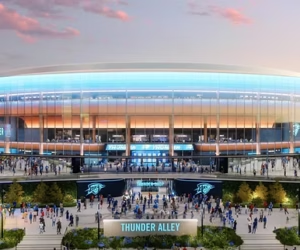
Immersive, story-driven environments are emerging as the most powerful draw for people and investment. Districts centered around sports, culture, and entertainment succeed not because of their scale, but because they create emotion, connection, and memorable moments that differentiate them in competitive markets.
2. Workplace Transformation Enters Its Next Revolution
With talent competition intensifying, organizations are redesigning workplaces more boldly than at any time since the pandemic. Employers are prioritizing purpose, daily value, and environments that strengthen culture, with the goal of attracting talent and accelerating innovation.
3. Agility and Intelligence Become Essential in a Volatile Market
Rising construction costs, shifting trade policies, and unstable supply chains are driving developers toward new operating models. Predictive cost intelligence, real-time data, and collaborative digital tools are now essential for keeping complex projects on schedule and responsive to rapid change.
4. AI Redefines What’s Possible in the Built Environment
Artificial intelligence is evolving from a productivity enhancer into a creative catalyst for design. By revealing patterns in how people interact with buildings, AI allows designers to experiment, iterate, and reimagine space with unprecedented speed. Its impact is expected to reshape placemaking at every scale.
5. Existing Spaces Gain New Life in a Changing Urban Blueprint
Cities are redefining how space is used. Stadiums double as civic gathering places, transit hubs serve as exhibition and entertainment venues, and older malls are repurposed as universities or community centers. The next wave of urban development blends culture, commerce, and community in entirely new ways.
6. Future-Proofing Becomes Non-Negotiable
As extreme weather accelerates, the resilience of real estate becomes a determining factor in urban success. Designers and developers are prioritizing flexible, durable, and regenerative solutions to ensure that new and existing assets can withstand climate-driven risks.
Together, these six trends signal a decisive shift toward design models that emphasize adaptability, intelligence, and emotional value. Organizations that align to these forces in 2026 will be better positioned to thrive in a rapidly changing built environment.