


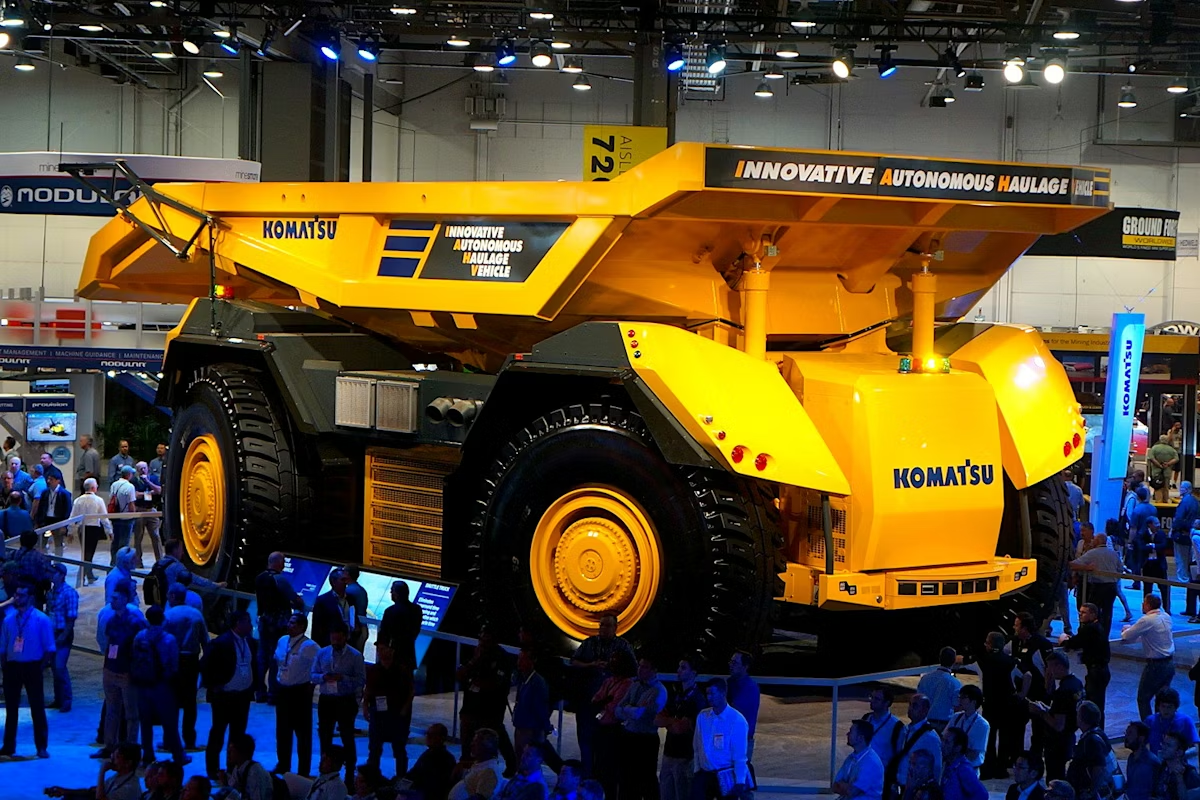
Komatsu has reached a historic milestone in autonomous mining, successfully commissioning its 1,000th ultra-class autonomous haul truck powered by the FrontRunner Autonomous Haulage System. Notably, this achievement reinforces the company’s leadership in mining automation.
The milestone truck, a 930E-5AT model, has been deployed at Barrick’s Nevada Gold Mines operation in the United States. Importantly, this deployment marks Komatsu’s expansion of autonomous haulage into gold mining through a strategic partnership.
Expanding Automation Across Global Mining Operations
Since launching its commercial autonomous solution in 2008, Komatsu has remained at the forefront of innovation. To date, customers using the FrontRunner system have moved more than 11.5 billion metric tons of material. As a result, the technology has proven its scalability, efficiency, and reliability across demanding mining environments.
Furthermore, FrontRunner operations now span North America, South America, Australia, and Europe, supporting a wide range of commodities. In 2024 alone, the system generated approximately $2.4 billion in social impact, based on industry-recognized methodologies.
Technology Advancements Driving Sustainability
In addition to haulage automation, Komatsu continues to expand its autonomous ecosystem. This includes Autonomous Water Trucks and other remotely operated equipment integrated into a unified fleet management system.
Moreover, the company recently achieved another industry first by autonomously operating an electric drive truck connected to a dynamic trolley system. Consequently, this innovation highlights the potential for combining automation with electrification to meet sustainability goals.
Strategic Partnerships and Industry Impact
Partnerships remain central to Komatsu’s success. Its collaboration with Barrick demonstrates how automation improves both productivity and safety. At the same time, it enables workforce transformation by shifting operators into more skilled roles.
According to Barrick’s leadership, autonomy enhances operational predictability while also improving energy efficiency and reducing environmental impact. Therefore, such collaborations are shaping the future of modern mining.
Looking Ahead: Software-Defined Mining
Looking forward, Komatsu is accelerating the development of software-defined mining equipment. By building a unified autonomy platform, the company aims to create machines that continuously adapt to site conditions.Ultimately, this approach is expected to unlock higher productivity, improved safety, and long-term sustainability. As global demand for minerals continues to rise, Komatsu remains focused on delivering scalable, future-ready mining solutions.
Komatsu continues to expand its autonomous and digital mining ecosystem, building on innovations showcased at CONEXPO-CON/AGG 2026


